Air Quality: Study of Green Spaces
Ten years of NO₂ data, two monitoring sites, and a children's book — translating environmental research into public action.


Class:
ENGS 37: Environmental Engineering
OVERVIEW
Identified a measurable correlation between proximity to green spaces and improved air quality across monitoring sites in Cologne, Germany — one of Europe's most densely populated cities. Findings were translated into two public-facing outputs: a research website deployed to Cologne residents, and an original children's book reaching the city's youngest demographic.
The project analyzed five years of meteorological data (2018–2023) alongside NO₂ concentration readings across two contrasting sites — a green space park and a heavily trafficked highway corridor — to quantify how urban vegetation affects ambient pollution levels.
MY ROLE.
Identified NO₂ as the primary pollutant of interest and researched the mechanisms by which green spaces reduce ambient concentrations
Analyzed wind pattern and NO₂ data across two sites using R, developing visualizations that revealed spatial patterns in pollution distribution
Co-designed and deployed a public-facing research website communicating findings to Cologne residents across multiple audience segments
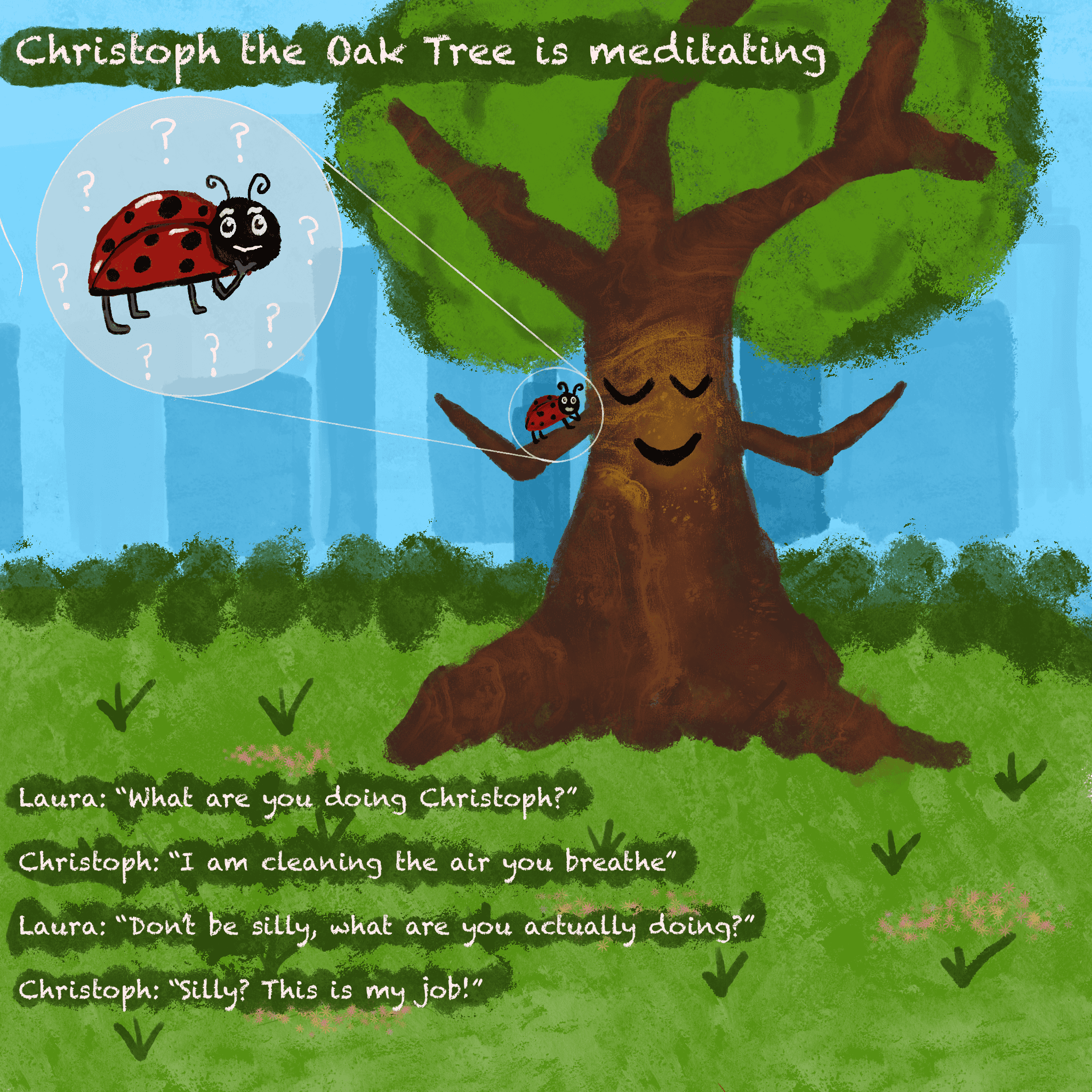
Authored and illustrated an original children's book on air quality and green spaces, designed specifically to reach the youngest demographic in Cologne




–
Data Analysis (R) • Environmental Research • Data Visualization • Science Communication •
–
Data Analysis (R) • Environmental Research • Data Visualization • Science Communication •
–
Data Analysis (R) • Environmental Research • Data Visualization • Science Communication •
–
Data Analysis (R) • Environmental Research • Data Visualization • Science Communication •
–
Data Analysis (R) • Environmental Research • Data Visualization • Science Communication •
Related Projects